Diverse Activities (E3.1.10)

Sub Category: Planning Framework: Environmental Design, Equipment, Materials, Routines, Schedules, and Learning Formats
Credential Level: Level 1 •
Age Group: Infant, Toddler, Pre-K
COMPETENCY STATEMENT
Ensures there are activities, games, toys, and materials in the classroom to support exploration across domains: social and emotional, cognitive, physical, and language
DEFINITIONS
Teachers can support children’s development by providing different and engaging types of activities and materials. Thoughtfully selected resources ensure a balanced learning environment, fostering curiosity and growth. These activities can support multiple learning domains at once, such as cognitive, social-emotional, and physical development, by integrating various skills and concepts into a single experience.
EXAMPLES
Diverse Activities
Age Group: Infant
Age Group: Infant
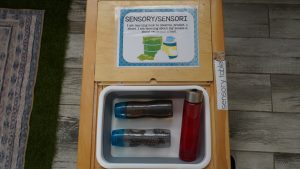
In this image, the sensory station has sensory bottles available for use. Notice how the sensory bottles have various items inside them — an example of ensuring materials in the classroom support exploration across different domains, such as sensory exploration.
Diverse Activities
Age Group: Infant
Age Group: Infant
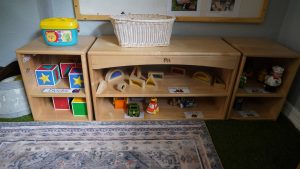
In this image, the shelves hold various toys such as large blocks, water blocks and a shape sorter box . Notice the shape sorter box — an example of ensuring materials in the classroom support exploration across different domains, such as problem solving.
Diverse Activities
Age Group: Infant
Age Group: Infant
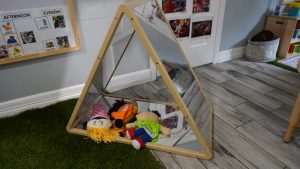
In this image, there’s a triangular mirror structure with puppets available for children to use. Notice how the mirror shows the puppets’ reflection — an example of ensuring materials in the classroom support exploration across different domains such as emotional awareness and self-regulation.
Diverse Activities
Age Group: Infant
Age Group: Infant
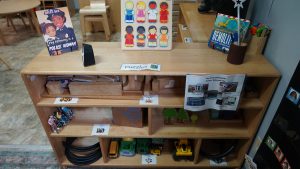
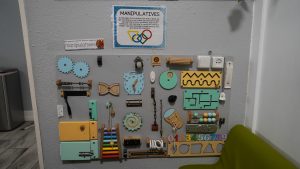
In this image, there’s a fine motor center with an activity board on the wall. Notice how the activity board has interactive parts designed for hands-on exploration — an example of ensuring materials in the classroom support exploration across different domains such as fine motor skills, math, and problem-solving.
Diverse Activities
Age Group: Pre-K
Age Group: Pre-K
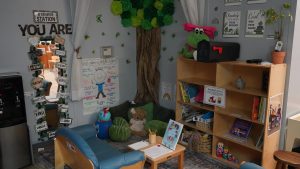
In this image, there’s a Reading center. Notice how there’s books and a mirror available — an example of ensuring materials in the classroom support exploration across different domains such as sounds, speech and listening, and emotional awareness.
Diverse Activities
Age Group: Pre-K
Age Group: Pre-K
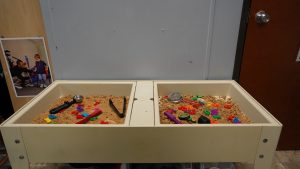
In this image, there is a sand table. Notice how there are tongs, an ice cream scoop, magnet wands and magnetic letters—an example of ensuring materials in the classroom support exploration across different domains such as sensory exploration, fine motor play and problem solving.
Diverse Activities
Age Group: Pre-K
Age Group: Pre-K
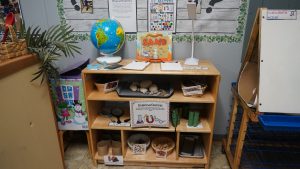
In this image, there is a science center. Notice how there is a book, mirrors, and a variety of sensory items available—an example of ensuring materials in the classroom support exploration across different domains such as sounds, speech and listening, and emotional awareness.
Diverse Activities
Age Group: Pre-K
Age Group: Pre-K
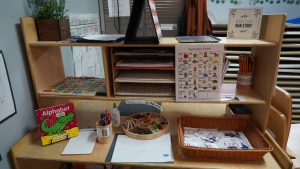
In this image, there is a writing center. Notice how there is a book, puzzle, and a variety of writing utensils—an example of ensuring materials in the classroom support exploration across different domains such as sound, speech, and listening, fine motor development, and problem solving.
Diverse Activities
Age Group: Pre-K
Age Group: Pre-K
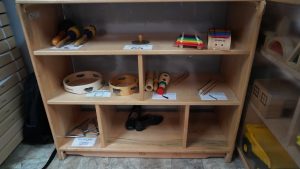
In this image, there is a music center. Notice how there are various musical instruments—an example of ensuring materials in the classroom support exploration across different domains such as sound, speech, and listening.
Diverse Activities
Age Group: Pre-K
Age Group: Pre-K
In this image, there is a local community center. Notice how there are books, puzzles, and blocks—an example of ensuring materials in the classroom support exploration across different domains such as sound, speech, and listening, gross motor development, problem solving.